
Building Stronger Frontline Responses to Intimate Partner Violence
Over 350 service providers in Balaka and Lilongwe are being equipped to deliver survivor-centred responses to Gender-Based Violence through the PKN Programme’s Gender Transformative Curriculum.
Strengthening Frontline Responses
Strengthening the response to Intimate Partner Violence (IPV) begins with strengthening those who provide frontline services. Through the Pamodzi Kuthetsa Nkhanza (PKN) Programme, more than 350 frontline service providers in Balaka and Lilongwe are being equipped with the knowledge and practical skills needed to deliver survivor-centred responses to women and girls experiencing violence.
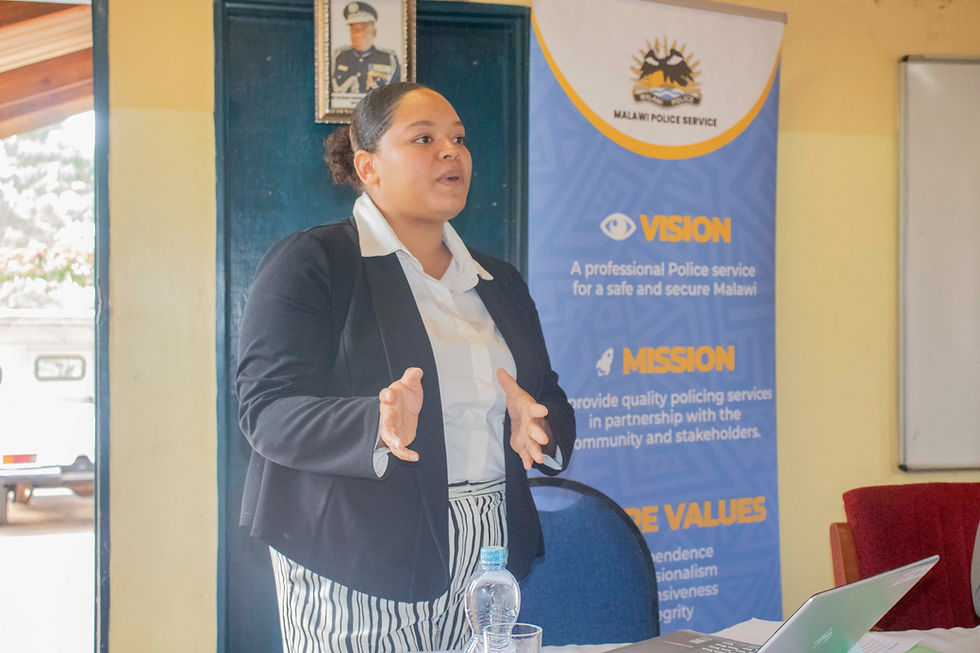
WOLREC and its partners are conducting the Gender Transformative Curriculum (GTC) training, reaching police officers, healthcare workers, social welfare officers, judiciary staff, and community leaders, the full network of formal and informal duty-bearers whose daily decisions shape whether survivors receive the support they need.

Equipping Service Providers with Practical Skills
The Gender Transformative Curriculum, implemented under the Response component of the PKN Programme, equips service providers with the knowledge, skills, and attitudes needed to deliver survivor-centred, gender-responsive services. The curriculum challenges harmful gender norms, power imbalances, and discriminatory practices, while strengthening coordination and referral pathways across sectors.
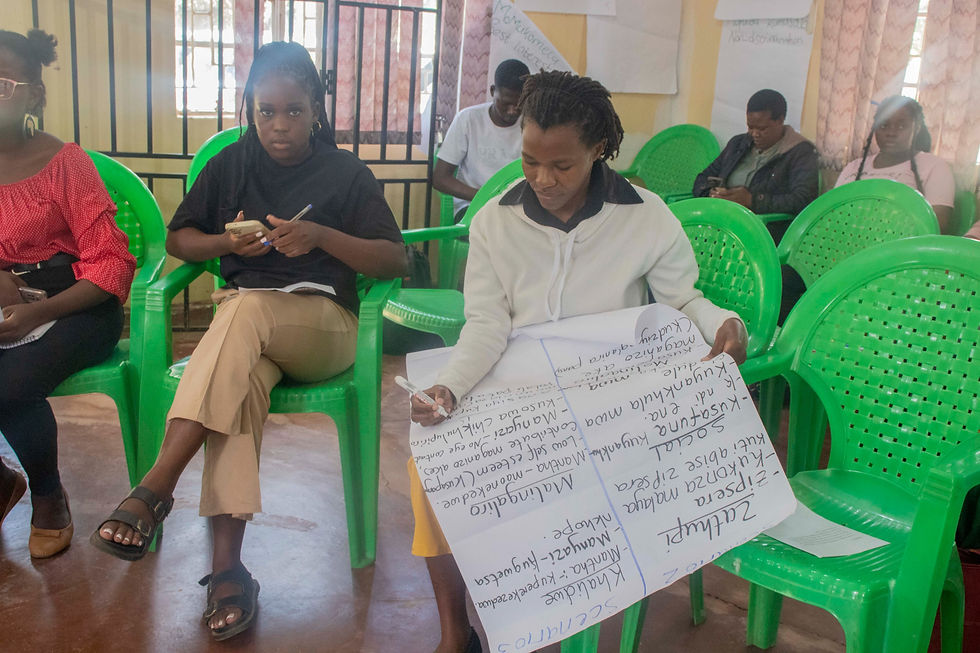
During the four-week training sessions, participants are reflecting on the root causes of Intimate Partner Violence, deepening their understanding of survivor-centred approaches, and practising collaborative working across different service sectors to ensure survivors receive timely, coordinated support. By targeting both formal and informal duty-bearers, the GTC is helping embed gender-transformative practices into government systems and community structures — creating longer-term impact that will outlast the programme itself.
KEY HIGHLIGHTS
• 350+ frontline service providers trained in Balaka and Lilongwe Districts
• Multi-sectoral participants: Police, Judiciary, Health, Social Welfare and Community/Traditional Leaders
• Focus on survivor-centred responses to IPV and Violence Against Women and Girls.
• Embedded in government systems for long-term, sustainable impact
• Implemented by WOLREC, Girls Empowerment Network- GENET, and the Human Rights of Women and Girls with Disabilities.
Strengthening Collaboration for Survivor Support
For many participants, the training has reinforced the importance of working across sectors — and strengthened the practical skills needed to do so effectively. Speaking after attending the training, Memory Black, a Social Welfare Officer from Balaka District said the sessions had deepened collaboration with Accompaniers to ensure that every survivor receives comprehensive, coordinated support.
“We have also learnt how we can enhance our collaboration with our fellow service providers such as the police, healthcare providers and judiciary to ensure support of the survivor.”
Memory Black, Social Welfare Officer, Balaka District
Community leader Kapachika Kaisi from Traditional Authority Mkaya said the training had fundamentally strengthened participants’ ability to provide appropriate support and referrals for survivors. “Through the training, we have been equipped with skills on how to handle a survivor and how to provide referral,” he said.
Towards Safer Communities
With support from district gender offices, the PKN Programme has already reached approximately 350 frontline service providers in Balaka and Lilongwe — service providers whose strengthened knowledge and skills will directly shape the quality of support available to survivors of Intimate Partner Violence.
By building the capacity of frontline responders and improving coordination across sectors, the PKN Programme is helping construct a more effective, survivor-centred response to Intimate Partner Violence in Malawi — one that reaches beyond the lifetime of the programme itself.
About the Programme
The Pamodzi Kuthetsa Nkhanza (PKN) Programme is a four-and-a-half-year initiative funded by the Foreign, Commonwealth & Development Office (FCDO) through the What Works to Prevent Violence: Impact at Scale (What Works II) Programme. It is implemented by WOLREC, Girls Empowerment Network (GENET), and the Human Rights of Women and Girls with Disabilities Consortium.




Comments