
Meka Kamanga Gausi Shares Lessons on Scaling Violence Prevention at SVRI Forum 2026
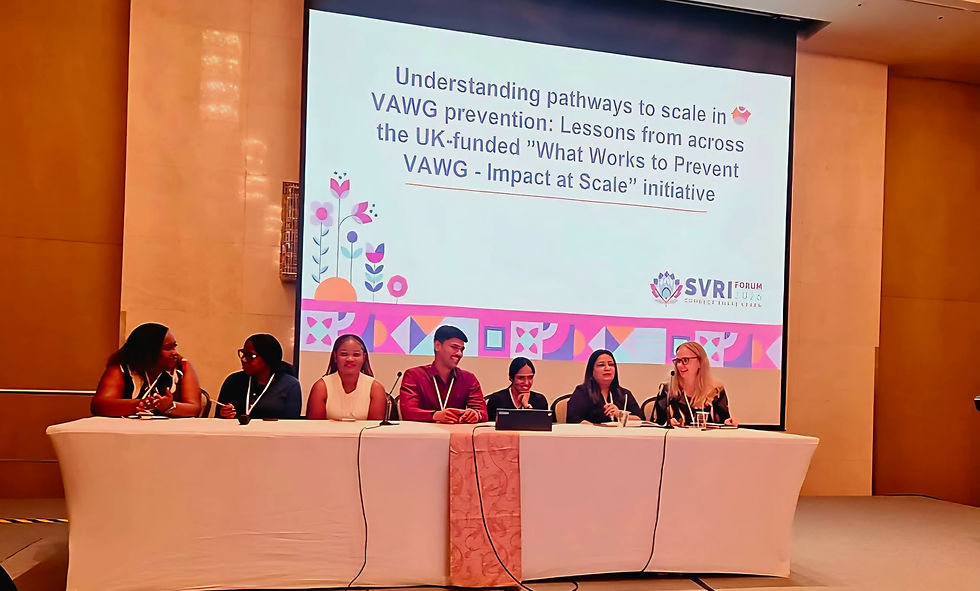
Bangkok, Thailand – Meka Kamanga Gausi represented the Pamodzi Kuthetsa Nkhanza (PKN) consortium and shared the PKN programme’s experience of scaling violence prevention with a global audience at the SVRI Forum 2026, which opened in Bangkok on Monday, 5 October.

Meka Kamanga Gausi, representing the PKN consortium under the FCDO-funded What Works 2 initiative, presented practice-based lessons on scaling intimate partner violence (IPV) prevention while maintaining intervention integrity, strengthening institutional engagement and sustaining feminist leadership.
PKN is a four-and-a-half-year programme, running until 2028, implemented in Malawi’s Lilongwe and Balaka districts, with National-Level Engagement. Led by WOLREC, the consortium comprises the Girls Empowerment Network (GENET) and WAG-Disability Rights.
The programme combines two evidence-based prevention approaches, SASA! Together and Moyo Olemekeza, a couple’s intervention adapted from the Zindagi Shoista model. These are complemented by a Survivor Support Fund, a gender-transformative curriculum for frontline service providers and a technical advisor embedded within the Malawi Police Service to strengthen survivor-centred protection and justice responses.
Gausi, highlighted three key lessons from implementation. First, adapting interventions to local contexts must not compromise their core components. Sustained technical assistance from intervention originators and the What Works team is essential throughout adaptation, implementation and close-out.
Secondly, institutional engagement requires long-term investment. Although a memorandum of understanding with the Malawi Police Service enabled the placement of an embedded technical advisor, staff turnover, institutional culture and competing mandates continue to require consistent support.
Thirdly, shared feminist leadership must be deliberately resourced. Inclusive programming, particularly for women and girls with disabilities, depends on clear roles, power-sharing, collective decision-making and structured learning among consortium partners.
The presentation emphasised that these lessons reflect implementation experience rather than an assessment of the programme’s impact on IPV.
For practitioners, funders and policymakers, the findings point to the need to finance sustained technical support, plan for institutional continuity and invest in coordination to maintain inclusive leadership and accountability.
“Scaling prevention responsibly is not simply about reaching more people,” Gausi said to the delegates, challenging stakeholders to consider how scale-up plans and budgets can protect intervention integrity and accountability throughout implementation.


Comments